Friday, 24 April 2009

Hannahs Evaluation

ment">

Media Studies AS Level, Foundation Portfolio, Main Task Evaluation

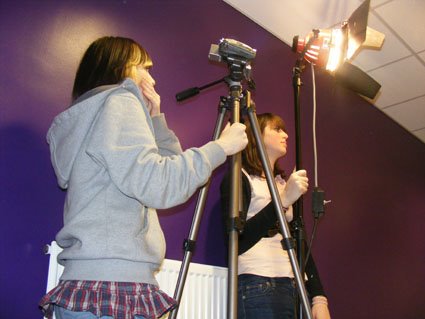
In our product mise en scene has a big part. We first had to think of a setting which would go well with the whole idea of our film. We chose a house because this would be easily recognisable for an audience and means they would not spend half the time trying to work out where the characters are. We also were quite picky about our lighting arrangements as we wanted to keep it all looking natural and like it was night time rather than having the whole area lit up if we had done this we might as well have filmed in the day. When filming out side we used one torch so that the characters could be seen we used a black filter over the top so that the lighting was not too harsh and did not shine too much light on each character. When filming inside we wanted to keep all of the lighting quite natural looking. We used one redhead as the key light because the natural lighting was slightly too dark and cast the characters in shadow. We also did a lot of filming inside with the lights off and used very dim lighting so that the characters could be seen but they were not lit up like a light was shinning on them. We tried overall to keep quite low key lighting as to keep everything looking natural we didn’t want it looking like a Broadway show with too much lighting. We also wanted to keep it realistic looking and using low key lighting was the best way to do this.

We made sure that all the characters costume and make up was relevant to the story line. We dressed the burglar in dark clothing with a ski mask to help the audience recognise him as a burglar. We dressed the girl in a nice dress so that it was easy to see she had been out most likely to a party. We used quite fashionable modern clothes to indicate that this is set in present time and that these are quite young characters.

The enigma code is used quite a lot throughout our film we have left many questions un-answered and raised many questions for the audience to think about. We have not revealed too much of what is happening and ended it on a point that would leave the audience wondering what is actually happening and who these people really are. We wanted our film to raise many questions and for it to be quite mysterious and confusing.


The classic iconography that appears in many thrillers that has appeared in our product is mainly the use of darkness and shadows we have included a lot of quite dark shadowy shots because these are usually associated with thriller films and them being quite dark and mysterious looking. We have also used the stereotypical teenage girl that is used in most thrillers. Mainly they go home to an empty house or are left at home alone. This is quite iconic to thrillers because it creates suspense a young girl home alone poses as the perfect opportunity for something to happen to her. Also the covered face of the male character is quite iconic as its keeping his identity hidden this happens in many thrillers you don’t find out the antagonists identity till near the end or part way through the film as to keep the suspense and suspicions from the audience going.

We have used the typical protagonist of a young girl going home alone and something happening in our case there is someone in her house which is typical of thriller films. For example in Prom Night the young girl goes home to find someone in her house who has killed her family. In our case our protagonist is not sure whether she is alone or not but the audience no that there is someone else in the house with her. This creates suspense as the audience no that he is there but she does not. In prom night we see the protagonist hide under the bed but we do not see the antagonists face this is similar to what is happening in our sequence. However we do not see the antagonists face but we do get to see him around the house whereas in prom night the only piece of or antagonist that we get to see is his hands. Our antagonist is quite stereotypical as he is a male who is in a young female’s house when she comes home. However in prom night he is looking for her whereas in our sequence he does not expect our character to come home when she does he panics and hides. In prom night he is looking for the girl and she had to hide from him. However the characters a quite similar a young teenage girl who come home to find someone in her house or thinks there is someone in her house.

We have used the three stages of narrative

· The beginning showing our setting and our antagonist

· The middle sequence being him looking around the house, starting to pack things away, the girl coming home, her finding the things he has packed away

· The end being the girl leaving the room and the audience wondering as to what is happening and where the antagonist has gone.

Most of our peer evaluation includes people saying that it was quite confusing and raised many questions. This however is what we were aiming for with our product we wanted it to raise questions and make the audience unsure about what was happening. Our main strengths seemed to be the use of camera angles and how we had made it faced paced and you had to actually think about what was happening. However most people said that the music was too fast paced and needed slowing down.

In my media product we have presented the male character as a stereotypical male. He is dominant in the way that he is the character that is in control. He is more in control of the situation than our female character. He is represented as mysterious in the way that you never see his face throughout the whole of the opening sequence. This is done so that the audience will wonder who he is. They can see that he is obviously in control of the situation as he does not get caught and seems to get away with what he is doing. However he is not as in control as it might seem. He is caught off guard and has to hide nearly getting caught as he leaves things on the bed that should not be there. Here he is being represented as quite clumsy and forgetful and the first impression of him being quite an in control character is lost.

The camera work used for shots of the male character is mainly close up or tilted angle shots. These are to keep his identity quite mysterious and keep the audience wondering who he is and what it is he is doing. All shots with our male character in are also quite dark to keep the anonymity going and keep the idea of it being night time. Fast paced music has been used to represent that our male character is in quite a hurry and that he is unaware of things to come. We have included all of these conventions to show that our male character is the antagonist of the story.

We have used a young white male character to help appeal to a mature young audience. We have represented him as a stereotypical male with other conventions including clumsiness and unawareness. We have done this to make him less stereotypical but still recognisable as an individual character. However we have made him out to be like a stereotypical burglar. With him breaking into the house and the fact that he is wearing a ski mask to cover his face and that he is in shadow a lot of the time. We have done this so that the audience will draw to the conclusion that he is burgling the house as he breaks in which obviously means that this is not his house. We have used a male character because they are stereotypically the gender that would burgle a house rather than a female character.

We have represented the female character as a stereotypical teenage girl. She comes back from a party drunk and enters the house alone. This is a stereotypical thriller convention as it seems like a silly thing to do but it happens in many films where the teenage girl is left home alone in the dark this seems to please the audience more rather than if it was a male character doing exactly the same. She is young and pretty and also dressed up. We have done this because we wanted to represent her as a stereotypical teenage girl who is in danger but does not realise it herself. We have used mainly long shots and mid shots so that it is easy to see her facial expressions and we want the audience to see clearly what she looks like as she is the protagonist. Unlike our male character whose identity is hidden throughout the whole sequence.

In many shots our female characters will turn lights on this is so that we can clearly see who she is and that this is her house. Unlike our male character we want her identity to be noticeably shown in every shot that she is in so the audience can see that she is the protagonist. We have represented her quite negatively as she is drunk this puts a negative look on teenagers this also represents her vulnerability to the situation. She is represented as a typical teenager who has gone out and had a good time at a party however who has come home to something most teenagers would not.

We have used POV shots with a ghost affect on as she is walking up the drive to represent how she is not in control of the situation and how vulnerable she could be as she can not see where she is going properly. This will also help to appeal to teenagers as they no what it is like to not be in control when they have had a bit too much to drink. The sound is very faced paced to add to the idea that she is not aware or in control of what is happening she just seems to be in the wrong place at the wrong time.

Both characters have stereotypical conventions about them with the male being the stronger character and seeming more in control and the female seeming to be the weaker character and less in control seeming like she would be less able to fight back if the male character was to attack or harm her in anyway.

The audience we have aimed our media product at is late teen’s young adults. This is because it raises a lot of questions and a younger audience might just find it confusing and might not quite understand what is going on. It is also quite faced paced and younger audiences again might not like it as it has a more complicated faced paced story line. We have decided on late teens to young adults because they would appreciate the more faced paced storyline and the fact that it raises questions it gives them a challenge and makes it more interesting for them. Because it includes younger characters and touches on more subjects that young adults are more likely to appreciate like a drunk young girl and a young male skulking around her house they are more likely to appreciate and understand this piece than perhaps an older or much younger audience.

A real thriller that an audience of a similar age would have also enjoyed would be Donnie darko. This has the same elements of having the audience ask questions about a younger audience would find it confusing and an older audience might think it does not make sense and it is pointless. An audience of a similar age to the one for our product would have also enjoyed Donnie darko as it is quite mysterious and hard to work out which is also what our product is aiming to do. This audience is the best audience because they are young enough to appreciate what our product and Donnie darko are trying to do but both use young characters with particular storyline that’s difficult to understand which would challenge younger minds but not too young and appeal to people a similar age to the characters as they have more of an idea what the characters could be going through in both cases. In Donnie darko the point of growing up and how difficult it can be.

When using the camera I found it quite easy as I had similar cameras before. At first we had trouble working out how to record because we had forgotten which button we had to press. After we worked it out using the camera went quite smoothly. I did not forget to change the white balance every time the camera was moved and remembered that we were able to use the zoom if we were not able to get in close enough. When filming in the dark it was hard to get the camera at the right distance but after a couple of tries we managed it fine. The third time we filmed the camera we were given was not as good quality as the cameras we were given the first two times which meant the quality of our filming was not as good. I also found this camera needed manual focus to be used at lot and had trouble focusing in the dark when we had set up the lighting arrangements. We also were shown that we could film using different effects but the camera we were given did not have the affect we wanted on it (time delay) so we decided to do this in the editing suite instead.

We used three different types of software to put our product together. These were Imedia HD, Final Cut Pro and Live Font. First we imported everything into Imedia HD. We used this programme because we already new how to use it which made the process of putting our sequence together a lot faster. However we were slowed down by having to re film areas of our piece. After uploading all of our footage to Imeda we were able to cut clips down and piece them together to create our final product. We used a number of different effects which were easy to use and we found we did not have any problems using them. These included Ghost effect on the girls POV shots to help make everything look out of focus and wobbly as she is meant to be drunk. We also sped a couple of shots up because they were too slow. These included the car pulling up as when we watched the footage back the car pulled up extremely slowly.

We also used Imedia to add our music to our product. We first used a machine to record our music off a tape onto the computer we then imported it into Imedia. At first we had trouble cutting and pasting our music together and could not make it sound right. Eventually we managed to get it to sound ok but I was still not happy with the music on the final product. We then exported our product and imported it into Final Cut Pro to add the tittles into our film. We first created the tittles in Live Font as this had a wider selection of fonts and effects for fonts. We did not now how to use this programme and it took us quite along time to work out how to use it eventually we worked it out and created our title sequence. We then had to export each title and import them into Final Cut Pro. We had trouble doing this but this was because we were not saving them as a quick time movie. We then placed them in the place we wanted and then proceeded to add tittles to the rest of the sequence this being our names. We had to select where we wanted each title to go and how big and what colour we wanted them est. We had to be shown how to do this but once we were shown it was quite easy to do and took us no time at all to complete out product.

Using each of the programs helped me learn something new each time as I had not used Final Cut Pro or Live Font before. However once I had worked out to use them it was quite easy and was easy to shape our product to how we wanted it. As I did quite a large amount of the filming selecting the best shots was easier for me as I could see what I had done wrong in some shots and which shots looked better than others. I found using Imedia a lot easier than the rest of my group and grasped using it and worked out a lot of the shortcuts quite quickly. This meant I did a fair amount of the editing as I could do it quite quickly and new how to use the programme quite well. As I had done most of the filming I found I was quite critical about what should be used and what shouldn’t so that we used only the best quality shots in our final piece. As a group we worked extremely well together and helped each other learn how to use the different software so that we were all able to put our own input into the editing of our rushes and creating our product.

Our peer evaluation indicates that our editing was quite clear and sharp and didn’t contain any noticeable mistakes. They have also identified that the use of tittles was very good and liked the idea of the clock images flashing up between the tittles. Also that they were quite basic but this was effective because they did not take the focus away from the action. Overall they said that the tittles were effective and looked good. They also think that the music was too loud in places and seemed too dominating but I was not happy with how the music was in our final piece myself.

I feel that we have progressed immensely in this task from the preliminary task. We had to film three times but this time this was due to technical faults rather than us not knowing what we were doing. Everything ran a lot smoother as we knew how to use lighting to make things look more natural and when we were filming in the dark easier to see the characters outside. The first time we filmed outside the light we were given ran out of battery so we were no longer able to carry on filming. We were able to re-film out side and had learnt from our preliminary task that filming in the dark needed a strong light with a filter to make it look more natural looking on the character. So we used a white filter to make the light less strong which seemed to help.

Our continuity editing improved as we used mainly match on action this time as our film was quite fast paced and we wanted lots of close ups of hands in draws est. out match on action was a lot better this time as we had learnt from the preliminary task how perfect it needed to be. We made sure each shot was lined up perfectly with the next and tried to make them look flawless like they had not been filmed at different times.


We had a stronger story this time as we learnt from our preliminary that we needed a storyboard to work from and we needed all of our shots planned out to make it easier for us. We learnt from our preliminary that we needed a strong story line for our final piece to work. This is because our preliminary did not work because we had not thought out our storyline out properly. This time around we thought out our storyline and went thought every shot to make sure we new what we were doing and that we would not have to go back and re-film.

In my evaluation I wrote ‘’ One of the main things we need to include on our final piece will be to include more camera angles’’. In our final piece we made sure we used a variety of different camera angles and camera framing to make our piece more interesting and less samey. We even included a shot where we put the camera into the bottom of a plastic bag and let everything fall onto the camera.

"No Time For Goodbye" Evaluation - By Nicole Laurie.


In what ways does your media product use, develop or challenge forms and conventions of real media products?

A typical thriller film would be expected to include a range of specific conventions and distinctive features unique to the thriller genre. These principles are identified in many categories within these conventions, from Mise en Scene to camerawork, and narrative structure to iconography. I believe our opening sequence of a thriller film meets the standards of many of these conventions in a variety of interesting and significant ways.
A critical sub genre which makes a big impact upon the form of a thriller is Mise en Scene. Mise en Scene is hard to define but is regularly described as the design aspects of a production. It has eleven groups within it and the main ones which make the biggest difference to understanding establishment are the setting and lighting.
You would expect to see the film set in a seedy environment in a urban setting, a good example of this would be ‘What Lie‘s beneath‘ which I‘ve analysed in a earlier blog post and gone into further detail. Our thriller ‘No Time For Goodbye’ is set in a secluded house in Bolney, but ours contrasts to the urban setting stereotype because ours is very unclear as to where it is situated, due to the fact we have a very strong enigma code and it’s extremely quick paced, therefore I think it would impair the suspension if it was such a clear location and obvious settings.
The other convention within Mise en Scene which backs up the suspension factor and unclear features of our thriller is the low key lighting used. In a thriller you would expect it to be based in a dark environment with dark shadows and effects to create a unpredictable atmosphere. Our thriller is based predominantly in a dark area, especially at the beginning from the slow panning establishing shot as the male character is breaking into the house to where he enters the main room used - the parents bedroom. I was in charge of the lighting and through research and practice I think the lighting created a impressive mood symbolising a good attempt at a thriller stereotype. There are many more areas of Mise en Scene which make up a thriller based film, which without being used in the right context correctly and effectively, would effect the whole sequence. But these all depend on the situation and storyline of the film, so therefore it fits in and counterbalances the right atmosphere and story which is trying to be built up. For example in the costume category you wouldn’t expect to see a theft dressed in a pink suit. Or in the body language section you wouldn’t anticipate to observe a character laughing and doing star jumps when they’ve just been scared. But with the other areas of Mise en Scene I will discuss them further in later sections as it would fit in better.
and editing used. Editing such as crosscutting is usually involved which is used to establish continuity, it can create a piece of film which moves forwards and backwards in time and can also move location too. Furthermore it creates suspense and with faster cuts it can generate a violent action or a tension based sequence. Our thriller used this technique for a large section of it, as it crossed back and forth between the male and female characters actions. The male’s actions took place inside the house as he was collecting items and it would sharply cut to the female’s actions and introduction of her character as she stumbles up the drive and into the house. Along with the music this created a very tense and upbeat impression, very common in a thriller sequence.

Another frequent camera technique is point of view (POV) shots, where it shows subjective views from individual characters. This way it can show many people opinions and judgments on the situation and is a clever way to create a sense of isolation and first hand reactions. In addition, it is regularly used in shots where such circumstances as a murderer approaching a victim occurs or a character being anxious or scared, to really emphasise the surroundings and emotions occurring in that particularly event or to show the exact movements being made by the character (e.g. hitting somebody over the head).
Characters are a very important influence of a thriller’s formation and if you get it wrong, it may have a bad impact on the whole story. There is usually a main protagonist who most of the action centres around, which are customarily detectives, police, victims or a normal individual. They are usually introduced in the set up stage and then is involved in the heart of the action for the confrontation or disruption stage. They are usually the character who figures out the problem which evolves in the confrontation stage. This is frequently against a character opposing them, called the antagonist/villain. These are always human in the thriller genre, because if they are too much on the supernatural side (i.e monster) it would be classed as a horror film, this is how a thriller and horror film is distinguished. When the two main character (the protagonist and the antagonist) oppose each other, this is called a ‘binary opposition’. This part of our thriller doesn’t occur later on into the film as we only filmed the opening, but the synopsise on our blog will identify when this occurs.


But it is clear as to who is the antagonist within the first few shots, due to his custom, actions, movements and situation he’s in. Whereas it is not so clear whether or not Keira is the protagonist as not enough of the story has occurred in the opening to establish this, but there are clues to suggest this. For example, her outfit is bright and glamorous, which isn’t usually associated with evil characters, and also with the brief understanding of the situation, she seems vulnerable and even in danger. Furthermore to emphasise her vulnerability she is clearly drunk from the distorted point of views shots as she staggers up the drive. In the picture below you can see the two main introduced characters.

Leading on from this point, iconography is used profoundly In thriller productions to confirm situation and verify character status and circumstances. For example police uniforms and badges are commonly used items for police characters in thrillers, to prove authority and position. Another prime example associated with thrillers are weapons used (usually guns). In our thriller we didn’t use too much iconography as we didn’t need to establish anything yet as it was all part of the enigma, but for the antagonist he was dressed so he was thought to be a theft, verifying his criminal characteristics.
As I’ve mentioned many a time already, we used a enigma code throughout our sequence. This means we ‘hold back’ information about what is going to happen and in its place raise a variety of questions in the audiences minds. This is a very common and useful convention of a thriller film, as it draws the viewers in to carry on watching. A popular example of this happening in another thriller opening, is the opening sequence of ‘The Usual Suspects’ where the character on top of the balcony’s identity is not revealed therefore making the audience want to watch on to answer their questions about his hidden identity and solve the mystery formed. The youtube link to this opening is: http://www.youtube.com/watch?v=t6msq8mgdnE.
We did a similar technique in our production, as we never reveal the identity of the antagonist, or even the protagonist, consequently raising a number of questions. Moreover many more questions are raised for example, why is the male character collecting up such insignificant items (e.g. hairbrush, teddy bear) in a bag? And where has the female been and where have her parents gone? Enigma codes often rely upon forms of restricted narration which is what I shall explain next.
Narrative is the organisation of story material, so the order in which the story is told and the overall arrangement of the story. Unrestricted narrative is where the narrative shows us everything, giving us more knowledge than the characters, contrasting to restricted narrative - where elements of the story are not presented in the narrative to create intrigue for the audience. Restricted narrative is commonly used in thrillers, to create curiosity and enigma. This is clearly what we have used in our production. Typical story features of thrillers usually involve the narrative being driven towards the solving of the crime/s or threats/pressures to the protagonist/s and the end of the criminals/antagonists. Although there are a few exceptions to this feature where flashbacks are used where we possibly may be shown the ending first. For example in memento, where the beginning sequence is a cleverly constructed viewing of the man shooting a male in a backwards sequence, as shown below in the you tube clip. I’ve also done a thorough textual analysis on some of the key aspects of this opening earlier on in the blog.
There are three stages of narrative, known as the ‘three act structure’. This three stages are named the ‘set up’ or the ‘equilibrium’, then the confrontation (also known as the disruption or the complication) and finally the resolution. Within these three stages certain events and situations are likely to take place although these all vary depending on the genre.

The Set Up -->
+ Introduced to the scenario
+ Characters introduced
+ Introduction to important features of the location and state of affairs
+ Common in thrillers - Enigma code created

The Confrontation -->
+ Early in the story something occurs to cause a disruption
+ (Typically) the main characters (often heroic figure) needs to resolve problem
Binary opposition occurs

Resolution -->
+ Problem eliminated
+ Characters typically go back to renewed situation of normality

In our thriller production, not a lot is revealed or occurred yet, but a big part of the action has begun already, with the male antagonist breaking an entry and taking their possessions. But through reading our synopsise, you can see the storyline takes the typical thriller three act structure.
Overall I think our production uses the thriller conventions very similarly to many other thriller productions, in a unique and clever approach.


How does your media product represent particular social groups?

Representation of character is a huge part in establishing many areas of a film, from genre to the set up and the storyline to relationships between characters. In our production it is mainly focused on two main characters, the protagonist female (Keira) and the antagonist male (Gavin).
Keira identity is concealed for the beginning of the opening until the part where she steps into her parents room, this creates enigma and suspicion. From the distorted point of view shots at the beginning of her introduction going up the drive you would anticipate to see most properly a older male character, as that is the stereotypical age and gender associated with drunkenness. But when it is revealed it is actually a teenaged girl, you automatically sense she is more vulnerable and the victim. She represents a drunken typical teenaged girl stereotype, which is most probably a clever idea as it opens a new range of audience, as teenaged girls can connect to her age and situation. The camera shots used for her are a lot more open and more statically visible, with many medium shots and clear medium long shots, suggesting she is a more exposed character in the story and verifying her protagonist status.


The Mise en Scene of her character is very distinctive, she is dressed in a very dressy bright outfit, suggesting she’s been to a party or social event. Her makeup and hair is very bold and daring (for example the bright red lip stick and dress), suggesting confidence. The worms eye view shot of her looking through the items in the bag asserts this suggestion, as it shows prominence. Furthermore, her subtle reaction to the fact a random range of her parents items were on her bed in her bag and her parents aren’t there suggest a independent confident personality. Her expressions, reactions and body language are usually quite blank and distant with a sense of unawareness of the situation at hand, and maybe even naive.
Gavin, the antagonists representation is a very stereotypical all dark robber character, commonly used in thrillers and just how you would expect him to be, as you would expect a male all dressed in dark clothing. But throughout the sequence he is not identified clearly at all. The camera shots used for him are a lot more sneaky, sly and dark.

Furthermore they are a lot more clever and interesting than the females shots, for example the eye level medium shot shower reflection one which also emphasises the mystery of his presence. These shots are a lot more sudden and sharp, which blend in with his movements and decisions. Additionally, referring to the fact these shots are a lot more complicated and creative (e.g. the low angle shot from low eye level behind the soap item) it corresponds to his clever reactions and judgments, as it seems he knows what he’s doing and he knows what he wants. There is also never a full shot of him full length, except the mirror shot where Keira looks in the mirror to turn around and find he’s not there, emphasising the fact his identity isn’t going to be revealed. This shot also seems to suggest his representation is similar to that of a fictional scary nightmare based character. His costume is very stereotypical of his character’s role, with the whole dark clothing and covered face. Which goes on to say his props are also very expected and iconic, for example his head piece and the bin bag.

For the vast majority of shots involving Keira they were a lot slower with lengthy editing pieces and the lighting was more commonly lighter and more revealing. This contrasts to the shots involving Gavin, where the lighting was usually dark and making his identity be masked and the editing was a lot quicker and sharper. The music throughout the whole sequence was on going and interspersed with each other’s shots, but it was noticeable that Keira’s main shots were done with the music quietened and more in the background, suggesting the shots to be significant. Whereas Gavin’s shots had the music quite loud and upbeat, to create tension, suspense, added enigma and to keep the opening flowing at a fast yet sensible pace.
Gavin’s role of a theft is evidently negative, and we did this to fit the stereotype and to make it obvious he is a antagonist. Whereas on the other hand I would say Keira’s role isn’t as clear. The fact she is drunk is a negative attribute but is a typical habit stereotype for teenagers, so doesn’t affect any decisions. But her costume, hair and vulnerable expression and actions would suggest she is classified as a positive character and representation. Nevertheless, I don’t think we get far enough into the story to solve the enigmas and classify her identity to be able to be certain on her defined representation.

What kind of media institution might distribute your media product and why?

When thinking about the distribution of our thriller film, there are many different routes and choices we could take with contrasting consequences. There are three stages involved in the making of a film. These are the film production, which is obviously making the film, film distribution (often referred to as the ’invisible art’) which is the place the audience watch the film (e.g. cinema) and film exhibition which is securing the placement of the film on an exhibitors screen and for home viewing. Within our group we decided we would want to make our film a worldwide creation, being watched by many and hopefully being one of the leading mainstream films of the summer.
When thinking about which distributors to use, It was a hard choice due to a range of popular selection. A distributor is an company or organisation who will represent your film at festivals and markets around the world and who will attempt to sell it.
Through looking at a range of distributors through the independent cinema office website (http://www.independentcinemaoffice.org.uk/distributors) we eventually decided upon using the worldwide known ‘Lionsgate’. Close candidate’s were Momentum pictures (http://www.momentumpictures.co.uk/flash#main) and Sony Pictures (http://www.sonypictures.co.uk/) but I felt both were a little too none thriller based and even a little too action orientated.
I looked into research into Lionsgate through the website:
http://www.lionsgatefilms.co.uk/index_flash.php

On this website you can see there range of films are very thriller/horror based with films such as ‘My Bloody Valentine’ and the ‘SAW’ films being some of there huge success’s. I think our film ‘No Time For Goodbye’ would fit in well with there classifications and distributing skills as the genre is perfect and with Lionsgate being so popular and on high demand, we feel it could become very successful through it.


We would obtain a licence which will grant rights to the distributor and we shall market the film cleverly. A lot of advertising would be done through trailers, posters and television adverts etc. We would like to distribute it through to cinema standards which will then go on to DVD and television. You would also be able to download the film for a fee at the beginning of it’s selling at the cinema through the internet. Trailers would be shown through the television and internet links such as you tube, due to the fact a vast amount of the population own and use either and/or both a television and computer.

Who would be the audience for your media product?

We thought very carefully into the audience of our media production. First we thought into the certificate rating we would indicate it. We want to attract as many audiences as possible, but with the synopsise demonstrating distressing scenes such as ‘the detective tests the father’s dedication to the daughter by pointing a gun at her (his police gun, intended only for emergencies), he jumps in the way in order to save her life and is killed himself. (A tragic event, fairly conventional in thriller films).’, this indicates clearly the audience should not be under the age of 15 due to the violence and strong engaging story line. But we thought we didn’t have to rise the certification up to the age of 18, as our film would not be that intimidating and threatening for an audience between the age of 15-18. Furthermore if we did class it as certificate 18, we would be suppressing and limiting our audience range, which is not what we want to do. We also took a look at the website www.bbfc.co.uk which went into more detail about how to decide classification and this certified our decision of certificate 15.


Having this as our certificate has come quite nicely into the fact the main target audience of any film is typically 16-24 due to the fact this is the main stereotypical audience engrossed in not only the film media, but videogame industry and more.
The film seems to have a more male appeal and masculine impression about it, due to the thriller storyline and dark atmospheric conventions in it. But we feel we have balanced out the audience when considering gender. For example there is a range of both female and male characters throughout the story, with the main antagonist being male and the main protagonist being female, so the story isn’t overpowered by one sex. There are usually negative representations of females in films, for example they are commonly seen as either being stupid or a sex symbol. But in ‘No time for goodbye’ the main character Keira is not a negative representation of women, and I believe many females and especially teenaged girls would be able to relate with her, consequently bringing in a young and/or old female audience.
Due to stereotypical belief, men prefer the thriller genre and would therefore be thought to want to see this type of film more than a female would, but due to the fact our thriller is very enigma based and quite a mysterious puzzle to unfold - which requires concentration and alertness to be able to keep up and understand the story through to the end - we believe women would enjoy this type of film just as much as men. Carrying on from this point, I believe both young (from 15) and old would like to watch this film, especially for a social occasion or something, as it has a mixture of different features which would appeal to particular individuals in some way or another. Consequently, we believe there is a balanced gender appeal with a wide range of ages who would be interested in wanting to see our production.


How did you attract/address your audience?
There are a number of reasons why we think our thriller will attract and address our audience. Firstly, I think even the title ‘No Time For Goodbye’ is a catchy and intriguing name, which grabs the attention of the viewer as it seems to have hidden depths and a concealed meaning. The main title at the end of our opening sequence is very bold and striking which is a good impact on the build up to the cliff-hanger ending of the opening. This is also another reason as to why it is a appealing opening, as there is a mixture of anticipation and apprehension as to what’s next, which is then backed up by the intense amount of enigma. Our storyline and intended actions throughout the film are very disguised and cleverly complex, which means the audience has to think carefully and follow through vigilantly, this may be a appealing reason to many, as many film viewers enjoy a film that makes you think hard and deep.

NO TIME FOR GOODBYE

Another reason for the interest in our production would be how the audience can relate to the characters. The basic story setting and situation is realistic and some of the themes and issues can be addressed to the viewers and appreciated. For example teenaged girls and drinking, or people who experience family members going missing, or even robberies and dangerous situations etc. Furthermore, the attractiveness of the characters may influence the viewers desire to see the film, including the mise en scene aspects of the film.
An additional motivation for the audience to go and see it would be the music involved in the opening. It is extremely unique and upbeat which draws you in. The sound levels increase/decrease accordingly to the certain section of the opening, for example it quietens down when Keira enters the parents bedroom to investigate what’s going on.
Furthermore, we kept to the 180* rule concisedly which is where you don't cross the line, keeping the characters position in the frame consistent, therefore the whole film flowed nicely and there was no confusion with the positioning and continuity, furhtermore to emphasise this we used many eyeline matches to support this.
Throughout the sound aspects of the filming, we used a limited range of digetic sound as it it constantly over ridden by the upbeat music, but mainly over all used non digetic sound, which is sound not originated in the story world. We also used some foley sounds and parallel sounds to support the mood of the images.


The range of inside and outside shot varies the setting making it more attention-grabbing and deviating from being in just one place, creating more action. The camera shots and angles used are all very diverse and distinctive. Some of my favourites include the looking in the mirror to find nobody shot, which is the main part of the opening. I think this would attract the audience because you would want to watch on and know where the unidentified theft went and what she’s going to do about it. Other good shots which I think the viewers would appreciate are the very low angle shot from the bottom of the bag as you see him packing it up with a range of items, and also the other low angled shot from the drawer as he looks in, which sadly didn’t make it onto the opening as we had to cut down the film time as we kept going over our time limit. We were very good at making use of mirrors, which is a good way to manipulate the spectators minds and attract their attention.
A few examples of thrillers that our target audience would be likely to enjoy is one’s which are mind stimulating and have a lot of enigma within it, I would say a good example is 1995 ‘Se7en‘ film containing Brad Pitt and Morgan Freeman, as it received compliments which we are targeting for - ‘"Se7en is well crafted and ingeniously clever, making it one of the greatest films of the 90's". It includes a lot of enigma from the very opening sequence and requires a lot of attention and focus. A recent film I would say our audience would most likely enjoy similar to ours would be the 2008 ‘The Dark Knight’, as this is also very interesting and attention grasping.


What have you learnt about technologies from the process of constructing this product?
During the course of our production, we used a variety of technologies to construct our thriller carefully and effectively. The main user of the camera was Hannah, due to the fact she was the Head of Filming. But we all contributed towards ideas and adjustments, and through these experiences I’ve learnt how to control the white balance better, which was a big contribution I made due to the fact I was in charge of the lighting. Our white balance skills have increased from our preliminary task, as there doesn’t seem to be any mistakes from the white balance in our main production. We learnt to use the camera more creatively, for example with our cantered shots, as we’ve been more confident and experimental with this task.
. We also managed to keep our camera in focus well, which makes a big impact on the scale of professionalism of the piece. Another factor as to why these have improved is that all three of us broadened our ideas and stretched our imaginations to produce interesting frames and angles. For example, our shot from the bottom of the bag, and the beginning shot of Gavin’s feet running up the stairs (which also is a very good ongoing continuity shot). We also have evidence to back up the fact it was considered clever and steady camera work from our peer evaluations which state comments such as “a very good shot of the character looking in reflection” and “very steady camera work and a good tight focus”, both scoring 1.
Our editing skills were improved and developed through the practice and time spent investigating into the effects and variations we could use. For example the ghost effect we used on the point of view shots of Keira coming up the drive were very successful and blended well with the fast pacey rhythm. We also found some good shortcuts you can use on the editing software, for example control and ‘X’. We also discovered how to speed shots up, like we had to for the shot of the car pulling up as it was too time consuming. Furthermore we found out how to reverse a shot, which is what we did for the point of view shot from Keira’s view, when picking up and putting down the clock.
The lighting was my main area and I gained a lot of knowledge of techniques and methods when practicing and handling them. I used one main redhead light, which we discovered is extremely hot as it burnt some of the metal framing and set off my fire alarm at least three times! I also used filter paper to dim the lights into the perfect merge outside.


The credits of our names we used were very plain and small and came up every 4 or so shots in dark areas to subtly emphasise our names which were in white writing, whilst allowing it to not interrupt the main action occurring. Furthermore we did this so it built up to the main title at the end, which was cleverly adapted to be bold and brash to captivate the audience.
As a individual I think I completed my jobs to a good standard. I would have maybe improved some of the lighting position, as some peer evaluations stated you can see the reflection of light in some of the walls of the shots. My main strength is the creativity side of things, so I was in charge of the storyboard which I thought was pretty straight forward to follow, and although we didn’t stick to it very well, it was a good guideline for us. Furthermore I was in charge of being the location scout and photographer and thing I showed clear images of the areas we planned to use and chose a good setting and location (my house). I also did Keira’s makeover which I think was very good mise en scene decision! We are developed some good adventurous ideas, and our peer evaluations show a lot of compliments mainly towards our “excellent variety of shots” and “good music and titles”. As a group I think we worked really well, I personally enjoyed the group work as we had a good time. We really connected as a team, especially when developing inspirational suggestions and plans, and also at the editing stage as we all helped each other to create the best piece we could.


Looking back at your preliminary task, what do you feel you have learnt in the progression from it to the full product?


I think our group has progressed and made a huge improvement from our preliminary task back in December in a number of ways, both big and small. In my evaluation of the preliminary task, on the eighth slide, I talked about how we intended to improve practical work for the main task. The main point stated in the paragraph was ‘planning, I think we rushed into things too much without thinking ahead and planning a method/strategy and take notice of the time we have and make use of it accordingly’. I think we worked well as a team and took a lot of time to plan and make use of each others strengths to create the best thriller possible. Another point made in the last evaluation was ‘we will include more variety of shots and angles, as I think our production was a little weak on that front’. We have definitely succeeded on this point, as we have developed and included many interesting and unique shots and angles which we are very proud of. For example our point of view shots, our low angled bathroom shot behind the object looking at the door and our reflective shower shot. One of our main strengths we discovered is match on action shots, as we all have/had good ideas and techniques to create good continuity sequences, as shown numerous times in our production. A individual improvement I set myself was to ‘put in more lighting techniques and use more than one redhead for example’. I believe I stepped up to this challenge, as I tried my hardest to create a range of attractive and skilful lighting effects. I especially like my lighting in the montage parallel shots skipping between Keira and Gavin, as I believe it contributed to the realism and fast paced effect. Overall our technical skills have improved, for example our editing skills have extended. Finally, our last comment I made on my last evaluation was the fact I wanted to make the ‘final production a lot more interesting and individual, with more action and story, and it being a bigger and better challenge’. Personally, I think this was thoroughly achieved, as you can see from our synopsise the plan for the story is complicated and interesting and very individual. Our opening is very action packed and straight into it, with a good cliff-hanger. Conclusively, I think our production was a very big challenge, but between us all we’ve done an excellent job of it, consequently producing a unique and potentially high quality thriller opening.